At INDORA, we believe that inclusion is not built through good intentions alone. It requires method, care, reflection and tools that help people feel seen, heard and supported.
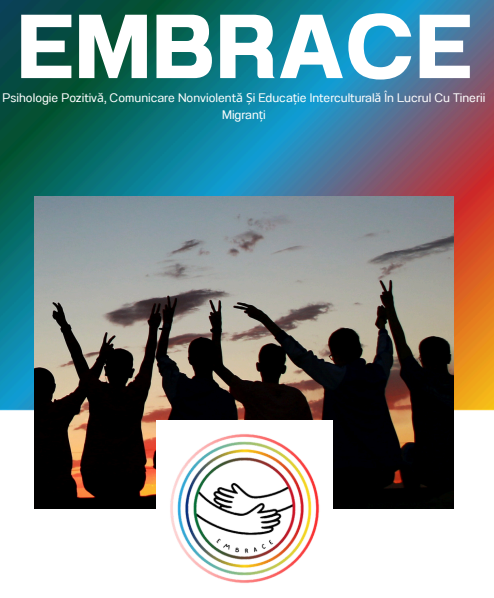
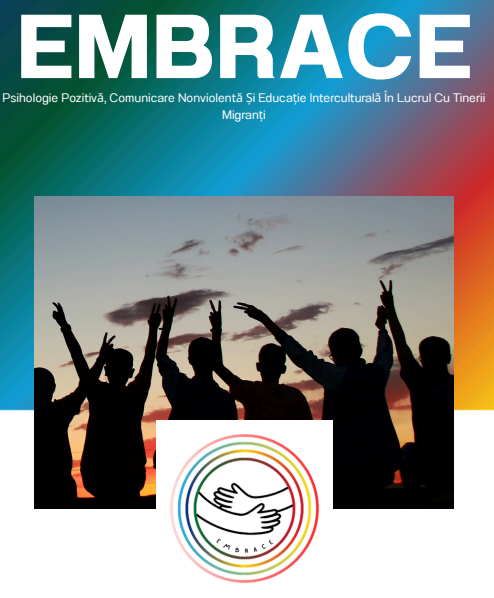
For this reason, INDORA is adopting the EMBRACE methodology, developed within the Erasmus+ project “EMBRACE – Stop the Exclusion of Migrant, Refugee and Displaced Youth”. The methodology brings together Positive Psychology, Nonviolent Communication and Intercultural Education as practical approaches for supporting young migrants, refugees and displaced persons in educational, social and community contexts.
The EMBRACE project was developed through a transnational collaboration between organisations from Portugal, Romania, Poland and Ukraine. Its purpose was to respond to the social exclusion faced by migrant, refugee and displaced youth, especially in the context of the displacement caused by the war in Ukraine. The methodology was created through research, consultation, testing and feedback from young people and professionals working directly with them.
Why this methodology matters
Young migrants and refugees are often spoken about, but not always spoken with.
They may face interrupted education, language barriers, uncertainty, social isolation, discrimination, emotional distress and difficulties in accessing meaningful opportunities. Too often, they are treated only as beneficiaries of services, rather than as young people with their own voice, strengths, history and capacity to contribute.
The EMBRACE methodology starts from a different position: young people are not passive recipients of support. They are active participants in shaping their own path and in building more inclusive communities.
This approach is very close to INDORA’s own vision.
What EMBRACE brings into our work
By adopting this methodology, INDORA strengthens its work with migrant, refugee and displaced youth through three core dimensions:
Positive Psychology, which helps young people identify their strengths, rebuild confidence, develop resilience and reconnect with a sense of meaning and possibility.
Nonviolent Communication, which supports dialogue, empathy, active listening and respectful communication, especially in contexts where young people may have experienced misunderstanding, exclusion or lack of recognition.
Intercultural Education, which creates space for real dialogue between cultures, beyond stereotypes or superficial ideas of diversity. It helps young people explore identity, belonging, difference and shared responsibility.
Together, these approaches help create safer, more reflective and more inclusive learning environments.
From integration to belonging
At INDORA, we do not see integration as a one-way process in which newcomers are expected to simply adapt silently to a new society.
Integration should also mean recognition, participation and mutual learning.
A young person who arrives in a new country does not arrive without identity, knowledge or value. They bring experiences, languages, memories, questions and strengths. Our role as educators, facilitators and community actors is to create spaces where these resources can be acknowledged and developed.
The EMBRACE methodology helps us do exactly that.
How INDORA will use the methodology
INDORA will integrate elements of the EMBRACE methodology into its educational and community-based activities, especially in programmes dedicated to:
-migrant and refugee youth;
-intercultural learning;
-Romanian language learning and adaptation;
-personal development;
-community participation;
-inclusive non-formal education.
This means that our activities will continue to focus not only on information and skills, but also on confidence, communication, emotional safety and belonging.
About the EMBRACE project partners
The EMBRACE methodology was developed through the collaboration of organisations from Portugal, Romania, Poland and Ukraine, bringing together expertise in education, youth work, inclusion and psychosocial support.
Project partners:
Comunidades que Florescem Association, Portugal;
A.C.T.O.R. – Cultural Association for Theatre and Origami in Romania;
Fundacja Centrum Aktywności Twórczej, Poland;
Volyn Youth Center, Ukraine.
INDORA values methodologies developed through international cooperation, evidence-based practice and intercultural dialogue, especially when they contribute to more inclusive and human-centred educational environments.
A commitment to thoughtful inclusion
Adopting the EMBRACE methodology is not just about using a new resource.
It is a commitment to working more carefully, more ethically and more effectively with young people whose lives have been shaped by migration, displacement or exclusion.
Inclusion does not happen automatically.
It has to be practiced.
It has to be learned.
It has to be built through trust, clarity and human connection.
At INDORA, we are proud to bring this methodology into our work and to continue building educational spaces where every young person can be more than “integrated”.
They can be heard.
They can participate.
They can belong.