
For many foreign workers arriving in Romania, finding employment is only the beginning of a much larger process of adaptation. A new job may offer financial stability and a fresh start, but everyday life still requires people to understand instructions, communicate with employers, navigate public services, read documents and respond confidently in unfamiliar situations.
In the context of OUG 32/2026, Romanian language learning for foreign workers in Romania has become an increasingly relevant subject for employers, employees and communities alike. Whatever the final scope of the applicable legal requirements may be, the practical value of Romanian language courses is already clear. Language skills can support safer workplaces, greater independence, better professional communication and more meaningful participation in life in Romania.
Foreign workers are not defined only by the labour they provide. They are also people building daily lives in Romanian cities and communities. Giving them access to practical Romanian language learning means giving them stronger tools to understand, decide, communicate and protect themselves.
Why OUG 32/2026 Matters for Foreign Workers and Employers
The discussion around OUG 32/2026 draws attention to an essential issue: language support for foreign workers should not be treated as a secondary benefit or a symbolic gesture. When workers cannot understand essential information in the country where they live and work, the consequences can affect safety, wellbeing, access to rights and workplace relations.
For employers, Romanian language learning should be viewed not only through the lens of compliance, but also as part of responsible employment practice. Workers who can understand basic instructions, express concerns and navigate essential daily situations are better supported, less isolated and more able to participate actively in the workplace.
A well-designed Romanian language course for foreign workers, OUG 32/2026 aligned, should therefore go beyond memorising isolated words or completing attendance requirements. It should help learners understand the language they encounter in real situations: at work, in accommodation, on public transport, at a pharmacy, in a medical appointment, at a bank or when speaking with an institution.
Before publishing specific information about obligations, course duration, required hours or reporting under OUG 32/2026, employers and service providers should consult the official legal text and any subsequent implementation guidance.
Romanian Language Learning Supports Safer Workplaces
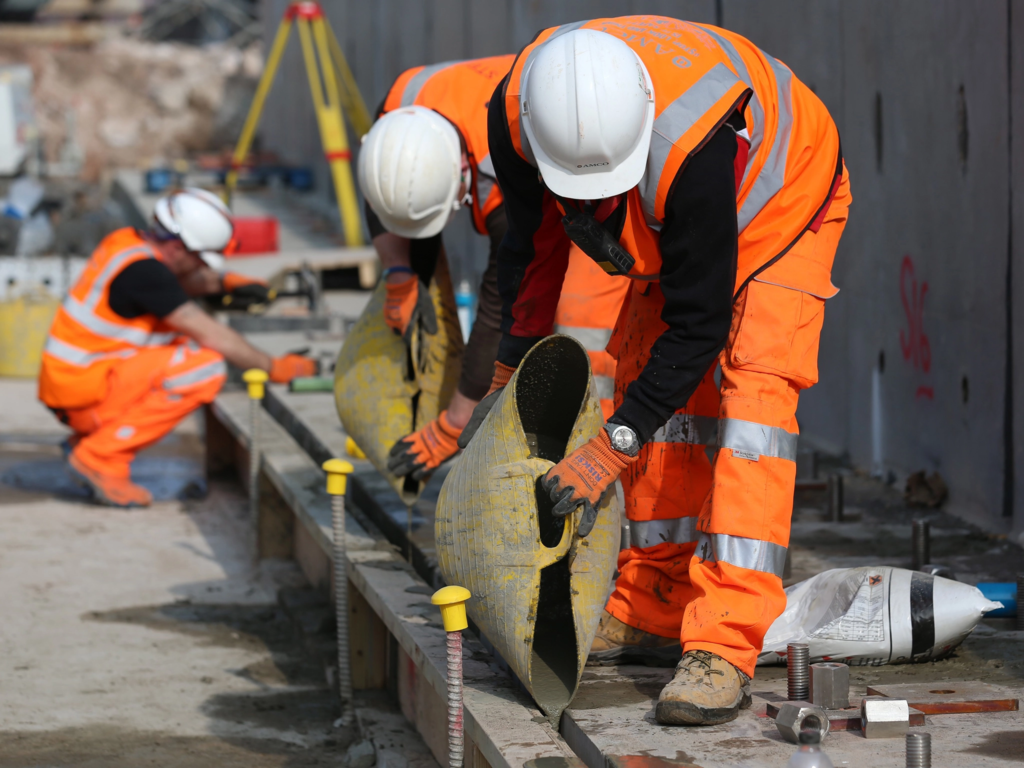
In many sectors employing foreign workers in Romania, communication is directly connected to safety. Construction, manufacturing, logistics, cleaning services, hospitality, food production, delivery work and agriculture all involve instructions that may need to be understood quickly and correctly.
A worker who knows basic Romanian is better able to recognise a warning, follow an instruction regarding protective equipment, report a technical problem or ask for help in an emergency. Words such as atenție — careful, pericol — danger, oprește-te — stop, foc — fire, accident — accident, and ajutor — help are not simply vocabulary words. In certain contexts, understanding them can reduce risk and prevent harm.
This does not remove the employer’s responsibility to ensure clear, safe and accessible workplace communication. Language courses should never be used as an excuse for inadequate health and safety measures or for placing the entire burden of understanding on workers. Instead, Romanian language learning can strengthen a broader commitment to safety, dignity and responsible employment.
Language Creates Independence in Everyday Life
A foreign worker’s life in Romania does not end when the working day finishes. People also need to travel, buy food, pay bills, visit pharmacies, attend medical appointments, communicate with landlords, open bank accounts and understand messages received from institutions or employers.
Without access to Romanian, these ordinary tasks may become difficult and exhausting. A person may depend constantly on a colleague or intermediary for translation. They may postpone a medical appointment because they do not know how to explain a symptom. They may accept a document or payment arrangement without fully understanding it.
Practical Romanian language skills gradually change this experience. A worker who can ask for directions, understand a price, explain a simple problem, request a copy of a document or say that they need assistance gains more control over daily life.
The ability to say Nu înțeleg. Puteți repeta, vă rog? — “I do not understand. Could you repeat, please?” — may seem simple. In practice, it is a form of independence. It allows a person to remain involved in decisions that affect their own life.
Better Communication Strengthens Professional Relationships
Foreign workers may bring experience, technical skills and a strong work ethic, yet still find it difficult to show their full ability when there is no common language at work. Misunderstandings may arise around schedules, tasks, equipment, accommodation, payments or expectations. Some workers may avoid asking questions because they are afraid of appearing incapable, even when the real issue is language.
Learning Romanian can make communication more direct and less stressful. Workers become more able to clarify an instruction, explain a difficulty, participate in everyday conversations or communicate with supervisors without always depending on another person.
For employers and Romanian colleagues, this can also improve trust and teamwork. Communication becomes less fragmented. Workers are more visible as colleagues and individuals, not only as people completing assigned tasks. A more inclusive workplace begins with the ability to speak, listen and understand one another.
Romanian Can Open Pathways to Professional Development
Learning Romanian does not automatically guarantee promotion, higher pay or improved employment conditions. These depend on qualifications, experience, fair employer practices, legal status and available opportunities.
However, language can remove an important barrier. Foreign workers who understand Romanian may find it easier to access vocational training, understand workplace procedures, apply for roles involving greater responsibility or present their previous skills more clearly.
For a person planning to live and work in Romania for a longer period, Romanian language skills may also support greater stability. They can help when looking for a new job, interacting with employment services, understanding a contract, attending a qualification course or managing administrative procedures.
A worker should not have to remain in the same position simply because language prevents access to training or communication. Romanian language learning can be part of a pathway towards recognition, autonomy and professional growth.
Understanding Rights, Contracts and Important Documents
Employment contracts, payslips, rental agreements, medical documents, bank forms and official notifications may have serious consequences. A foreign worker who cannot understand any part of these documents may be more vulnerable to error, misinformation or exploitation.
Language learning cannot replace qualified legal advice, authorised interpretation or professional support in complex situations. No one should be expected to understand a legal document simply because they attended a basic language course.
Still, even elementary Romanian can help workers identify what a document relates to and recognise when they need to ask for help. Understanding words connected to salary, working hours, signature, copy, payment, contract, residence, appointment or deadline can help a person avoid signing blindly or missing important information.
Expressions such as Vreau o copie a documentului — “I want a copy of the document”, Unde este scris acest lucru? — “Where is this written?” or Am nevoie de ajutor pentru a înțelege — “I need help to understand” are practical tools of self-protection.
Language Learning Supports Belonging Without Requiring Assimilation
Foreign workers may come from very different countries, languages, religions and cultural backgrounds. Learning Romanian should never mean that they are expected to abandon their identity, traditions or mother tongue.
Integration is not the same as assimilation. A person can remain deeply connected to their own culture while also learning how to communicate in the society where they currently live.
Many foreign workers experience isolation, especially when they live far from family, work long hours and have few opportunities to interact outside their immediate group. Romanian language learning does not solve every difficulty linked to migration, employment or loneliness. But it can make everyday contact possible: speaking to a neighbour, understanding a local announcement, attending a community event or simply feeling less invisible in public spaces.
These moments matter. They help transform Romania from a place where someone only works into a place where they can increasingly understand, participate and belong.
What a Useful Romanian Language Course Should Offer
In the context of OUG 32/2026, it is important that Romanian language learning for foreign workers is designed around real needs rather than only administrative formality.
A useful course should begin with communication that workers need immediately. This includes greetings and basic questions, safety vocabulary, workplace instructions, numbers and time, transport, shopping, medical situations, accommodation, contracts and emergency communication.
The course should be accessible to people with different educational backgrounds and different levels of familiarity with digital learning. It should use practical examples, visual support, repetition and realistic scenarios. Where possible, learners should also be supported through languages they already understand, especially at beginner level.
For employers, progress should not be measured only through attendance. The more meaningful question is whether workers become better able to understand essential information, ask for help, communicate at work and manage basic situations independently.
A Shared Responsibility
Supporting Romanian language learning for foreign workers is not only the responsibility of workers themselves. Employers, education providers, institutions and local communities all have a role to play.
Workers need time, access and encouragement to learn. Employers need reliable information about their responsibilities under OUG 32/2026 and should choose language support that is practical and respectful. Course providers need to design programmes that respond to real situations, not abstract grammar alone. Communities benefit when newcomers have more opportunities to communicate and participate.
Romanian language learning is therefore not merely an administrative condition. It is part of building safer workplaces, fairer opportunities and communities in which foreign workers are treated with dignity.
Conclusion
OUG 32/2026 brings attention to the relationship between foreign employment and Romanian language learning. While any specific legal obligations must be confirmed against the official text and current implementation rules, the wider principle is already clear: access to Romanian language courses can make a real difference in the lives of foreign workers in Romania.
Language can improve safety. It can reduce dependence. It can support access to services, clearer communication, better professional opportunities and stronger protection against misunderstanding or abuse. Most importantly, it can help people feel that they are not only working in Romania, but gradually finding their place within everyday life here.
At INDORA, we believe that language learning should be practical, accessible and rooted in dignity. Romanian language support for foreign workers should help people navigate work, services and community life with greater confidence, while respecting the identities and experiences they bring with them.